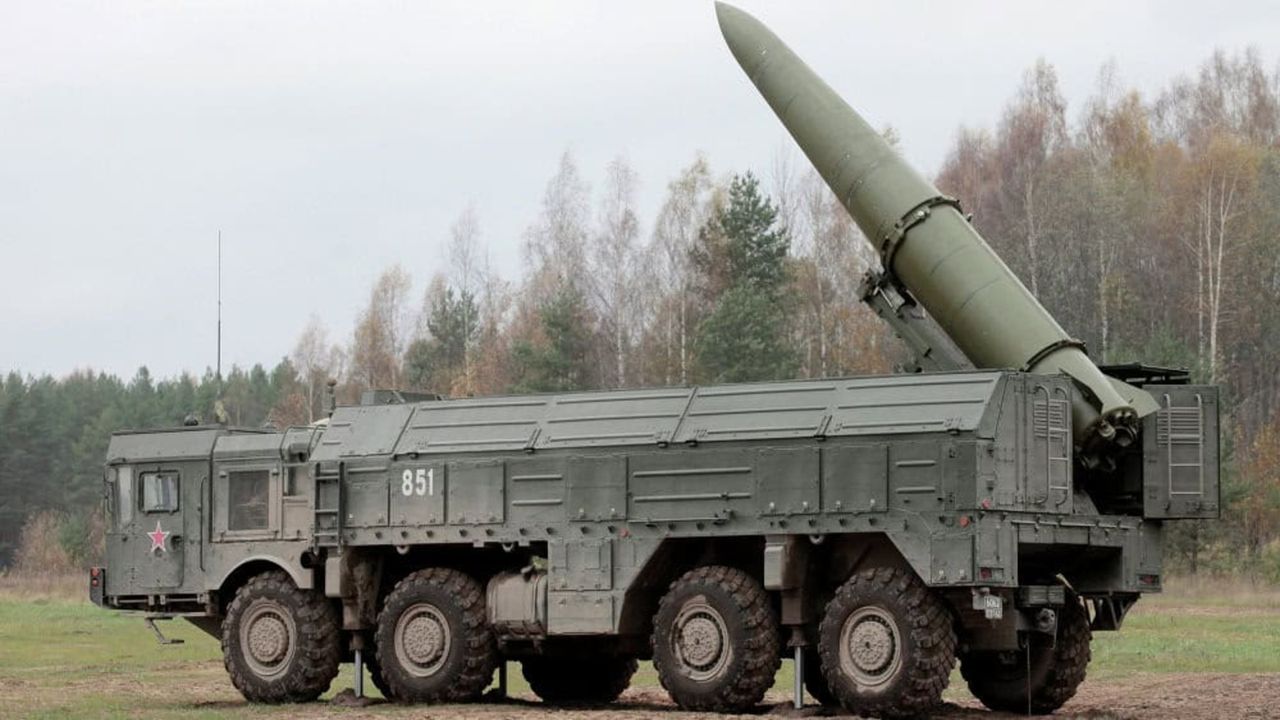
AMD FPGA and Micron memory found in Russia's Iskander-1000 ballistic missile, Ukraine Intelligence claims — but stopping illegal trade is nearly impossible
HUR identified 140 components linked to the upgraded Iskander missile system American manufacturers supplied 63 of the missile's identified electronic components Only one-quarter of all components came from Russian domestic manufacturers Ukraine’s Defense Intelligence (HUR) has released details abou
<![CDATA[ <article> <ul><li><strong>HUR identified 140 components linked to the upgraded Iskander missile system</strong></li><li><strong>American manufacturers supplied 63 of the missile's identified electronic components</strong></li><li><strong>Only one-quarter of all components came from Russian domestic manufacturers</strong></li></ul><p>Ukraine’s Defense Intelligence (HUR) has released details about foreign-made parts it says were found inside Russia’s upgraded Iskander-1000 ballistic missile.</p><p>The disclosure said American companies, including Xilinx, part of AMD, Atmel, part of Micron Technology, DM&P Electronics, Winbond Electronics, and Analog Devices, supplied critical parts for the missile's guidance and processing systems.</p><p>The agency also identified 140 components linked to the missile and said only a limited share came from Russian manufacturers.</p><h2 id="foreign-chips-remain-inside-russia-s-upgraded-missile-system">Foreign chips remain inside Russia’s upgraded missile system</h2><p>The disclosure points to continued foreign technology use in a weapon system developed by Moscow despite efforts to reduce outside dependence.</p><p>According to Ukrainian intelligence, 35 companies are connected to the production network supporting Russia’s Iskander-M missile family.</p><p>The agency said the updated 9M723-2 variant, also called Iskander-1000, has appeared during recent attacks and forms part of the Bora-M missile system.</p><p>The newer missile version reportedly uses a larger engine and modified launcher design, allowing it to reach distances of up to 550km.</p><p>This compares with the 390km range attributed by Ukrainian intelligence to the earlier 9M723-1 missile model.</p><p>HUR stated that Russia continues to use imported electronic parts in key missile areas despite attempts to replace foreign technology with domestic alternatives.</p><p>The agency said only about one-quarter of the identified components were produced by Russian firms.</p><p>The intelligence report lists 63 components linked to manufacturers from the United States, while Switzerland and Belarus each account for eight components.</p><p>Germany and Taiwan were each linked to four parts, while China supplied three components according to the information released by HUR.</p><p>“The most critical components—microprocessors, FPGAs, memory, digital-to-analog and analog-to-digital converters—come from American and Taiwanese manufacturers…” said Ukraine’s Defense Intelligence.</p><p>The missile’s guidance system was described as one of the areas with significant foreign dependence.</p><p>HUR claims only five of 43 parts inside a flight information processing unit connected to the missile’s laser gyroscope were Russian-made.</p><h2 id="sanctions-face-challenges-as-supply-chains-remain-complex">Sanctions face challenges as supply chains remain complex</h2><p>The identified components include field programmable gate arrays, memory chips, microprocessors and conversion devices used for handling digital and analogue signals.</p><p>Such parts are common in many electronic systems, making their movement across global markets difficult to monitor completely.</p><p>Ukraine’s intelligence service has called for stronger restrictions against companies, organizations and facilities it believes are linked to Russia’s missile production network.</p><p>The agency said international cooperation would be necessary to limit access to important technologies.</p><p>However, controlling the movement of advanced electronic components remains difficult because many parts have civilian uses and can pass through several countries before reaching final users.</p><p>The presence of international suppliers does not alone establish whether companies directly supply military programs.</p><p>The report comes as Ukraine continues efforts to disrupt Russia’s missile operations through sanctions pressure and attacks against launch equipment.</p><p>Ukrainian officials have also reported strikes against Russian missile launch platforms before they could be used.</p><p>“To counter the aggressor’s plans, it is important to consolidate efforts aimed at restricting Russia’s program for the development, production, and modernization of ballistic weapons,” HUR said.</p><p>Via <a href="https://united24media.com/war-in-ukraine/the-35-companies-behind-the-production-of-russias-deadly-iskander-m-missiles-22007" target="_blank" rel="nofollow"><em>United24media</em></a></p><figure class="van-image-figure inline-layout" data-bordeaux-image-check ><div class='image-full-width-wrapper'><div class='image-widthsetter' style="max-width:676px;"><p class="vanilla-image-block" style="padding-top:31.51%;"><img id="diM9tpwF2Lz85R8q85CT78" name="tr-g_news" alt="Google logo on a black background next to text reading 'Click to follow TechRadar'" src="https://cdn.mos.cms.futurecdn.net/diM9tpwF2Lz85R8q85CT78.jpg" mos="" align="middle" fullscreen="" width="676" height="213" attribution="" endorsement="" class="inline"></p></div></div></figure> </article> ]]>