Hackers found Flock cameras can track more than just cars — and Boston officials found camera data was shared despite being told it wouldn’t be
Boston officials released a report explaining why they won't use Flock cameras It reveals that Flock shared camera data despite saying it wouldn't Hackers also discovered that Flock cameras track more than just license plates The Flock backlash might have taken a backseat to more recent tech news —
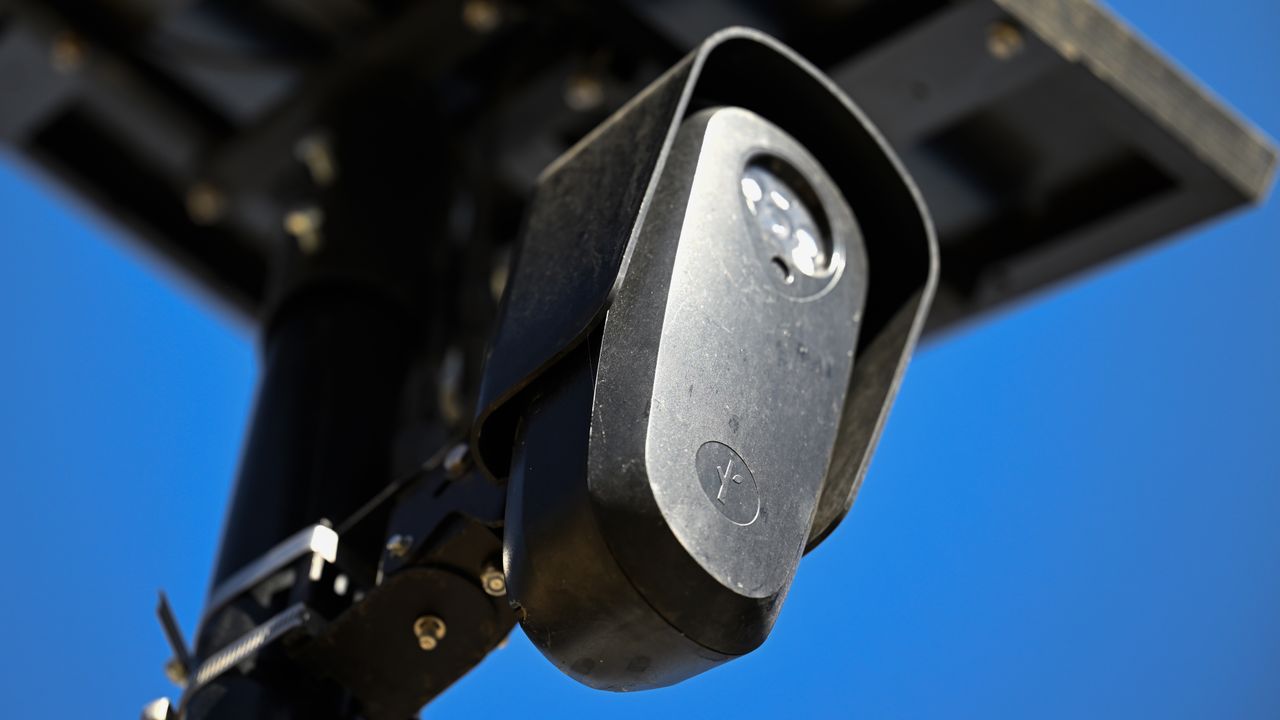
<![CDATA[ <article> <ul><li><strong>Boston officials released a report explaining why they won't use Flock cameras</strong></li><li><strong>It reveals that Flock shared camera data despite saying it wouldn't</strong></li><li><strong>Hackers also discovered that Flock cameras track more than just license plates</strong></li></ul><p>The Flock backlash might have taken a backseat to more recent tech news — namely, whether<a href="https://www.techradar.com/ai-platforms-assistants/the-big-ai-slowdown-battle-explained-5-things-you-need-to-know-about-trumps-ai-regulation-battle-with-openais-sam-altman-anthropics-dario-amodei-and-even-elon-musk"> AI development needs to slow down</a> before superintelligence wipes us out, or, on a lighter note,<a href="https://www.techradar.com/phones/iphone/now-we-know-which-iphone-apple-really-wants-you-to-buy-and-john-ternus-gave-us-the-key"> Apple’s first foldable iPhone</a> — but the anti-surveillance crusade is continuing, with Boston officials and its police department announcing the city will not be relying on the service any longer. </p><p>This follows the publishing of a 2025 report which included details on a Flock pilot the city ran in 2025. According to the report, the city discovered Flock was sharing data with external law enforcement agencies — despite Flock’s agreement with Boston saying data sharing was to be turned off, and the company confirming this was the case.</p><p>In response, city officials and Boston's police department have committed to no longer using Flock cameras going forward. However, it’s worth noting this is not an absolute win for privacy advocates. Boston police department has already begun pilots with two of Flock's rivals: a Motorola trial began back in February, while an Axon pilot began in June, suggesting it might merely move to a different Automatic License Plate Recognition (ALPR) service.</p><figure class="van-image-figure inline-layout" data-bordeaux-image-check ><div class='image-full-width-wrapper'><div class='image-widthsetter' style="max-width:1600px;"><p class="vanilla-image-block" style="padding-top:56.25%;"><img id="o5qzeQtrqmk4vfz5tKpgi7" name="flock-license" alt="Flock license plate reader" src="https://cdn.mos.cms.futurecdn.net/o5qzeQtrqmk4vfz5tKpgi7-1920-80.jpg" mos="" align="middle" fullscreen="" width="1600" height="900" attribution="" endorsement="" class="inline"></p></div></div><figcaption itemprop="caption description" class=" inline-layout"><span class="credit" itemprop="copyrightHolder">(Image credit: Flock)</span></figcaption></figure><p>This also comes as <a href="https://www.404media.co/hackers-stole-flocks-camera-software-revealing-how-the-company-tracks-cars-and-people-2/" target="_blank">hackers have discovered precisely what Flock cameras track</a>, and it’s not just license plates. Analyzing encrypted data, hackers found the cameras also detect people and bicycles — and they can also pick up and isolate specific bumper stickers. </p><p>The fact that the cameras are able to pick up and monitor so much more than some may have realized is worrying enough, but what’s extra concerning is that this data was recovered from a physical camera.</p><p>Hopefully Flock will solve this soon, but currently it means anyone with the right hacking skills could tear down a camera and access a chunk of the data stored inside the device — meaning you might not just need to worry about what officials can do with your data</p><figure class="van-image-figure inline-layout" data-bordeaux-image-check ><div class='image-full-width-wrapper'><div class='image-widthsetter' style="max-width:3840px;"><p class="vanilla-image-block" style="padding-top:56.25%;"><img id="mdjvPqJZZunuCQDrfEuBFM" name="TR-hacker-GettyImages-1923603027" alt="A hooded figure in front of a laptop. Digital symbols obscure his face and appear to be pouring out of his head" src="https://cdn.mos.cms.futurecdn.net/mdjvPqJZZunuCQDrfEuBFM-1920-80.jpg" mos="" align="middle" fullscreen="" width="3840" height="2160" attribution="" endorsement="" class="inline"></p></div></div><figcaption itemprop="caption description" class=" inline-layout"><span class="credit" itemprop="copyrightHolder">(Image credit: Getty Images)</span></figcaption></figure><h2 id="is-there-a-right-way-to-use-alpr">Is there a right way to use ALPR?</h2><p>For many, the answer to the question of if there’s a right way to use Flock or similar cameras is an emphatic no, but for advocates of the tech, there are sensible measures police departments could be using to minimize abuse.</p><p>Limiting automatic sharing of data to other agencies and restricting the police officers with access are a good starting point. They also argue that all Flock data requests should require case numbers to be attached, and for officers to provide a reason for each request.</p><p>Advocates argue this limits the likelihood that bad actors will be able to sneak a peek at Flock data, ensures that accessing ALPR information has a purpose, and creates checks and balances to prevent overreach from law enforcement agencies. As such, many agencies now deploy these methods.</p><p>However, some of these practices have been undermined by recent reports. Records obtained by the <a href="https://www.eff.org/deeplinks/2026/09/high-crime-lmao-how-cops-are-treating-mass-surveillance-joke?ref=404media.co">Electronic Frontier Foundation show that </a>many officers’ reasons for accessing the data include excuses like “LMAO,” “idk lol,” “TBD,” “Sexy,” and similar phrases. Others took to simply smashing their keyboards to fill the form with random letters.</p><figure class="van-image-figure inline-layout" data-bordeaux-image-check ><div class='image-full-width-wrapper'><div class='image-widthsetter' style="max-width:1920px;"><p class="vanilla-image-block" style="padding-top:56.25%;"><img id="FxMzh8xnBa3LCTagLY7nsC" name="Flock Safety Camera" alt="Flock Safety Camera" src="https://cdn.mos.cms.futurecdn.net/FxMzh8xnBa3LCTagLY7nsC-1920-80.jpg" mos="" align="middle" fullscreen="" width="1920" height="1080" attribution="" endorsement="" class="inline"></p></div></div><figcaption itemprop="caption description" class=" inline-layout"><span class="credit" itemprop="copyrightHolder">(Image credit: Tony Webster - Flock Safety ALPR Camera)</span></figcaption></figure><p>What’s more, in an attempt to make it easier to fill in records but still keep data transparent, Flock introduced prepared options like “Traffic infraction,” though some argue this is a step backwards, as it means officers have even less need to articulate their reasoning for accessing ALPR data — and it really doesn’t help when one option is a generic “Other.”</p><p>The EFF reached out to several police departments, and it seems that some have been reprimanded, while others claim department policy has changed since the nonsense reasons were given.</p><p>However, even if these forms were filled in correctly, or seemingly correctly, they wouldn’t prevent privacy violations. They’d merely allow someone to possibly audit the data after the fact to spot misuse if the forms were investigated.</p><p>That’s why many are saying the best protection — besides pulling down ALPR cameras entirely — is to require a warrant for each search.</p><p>Though tearing the cameras down might simply be the best approach, especially after that example above, where it shows ALPR cams see a lot more than we might credit them for, and that some of a camera’s data can be accessed by hackers who know what they’re after.</p><p>We’ll need to wait and see how things develop, but Flock’s troubles don’t seem to be ending soon.</p> </article> ]]>
Read the full article on TechRadar
Read Full Article →