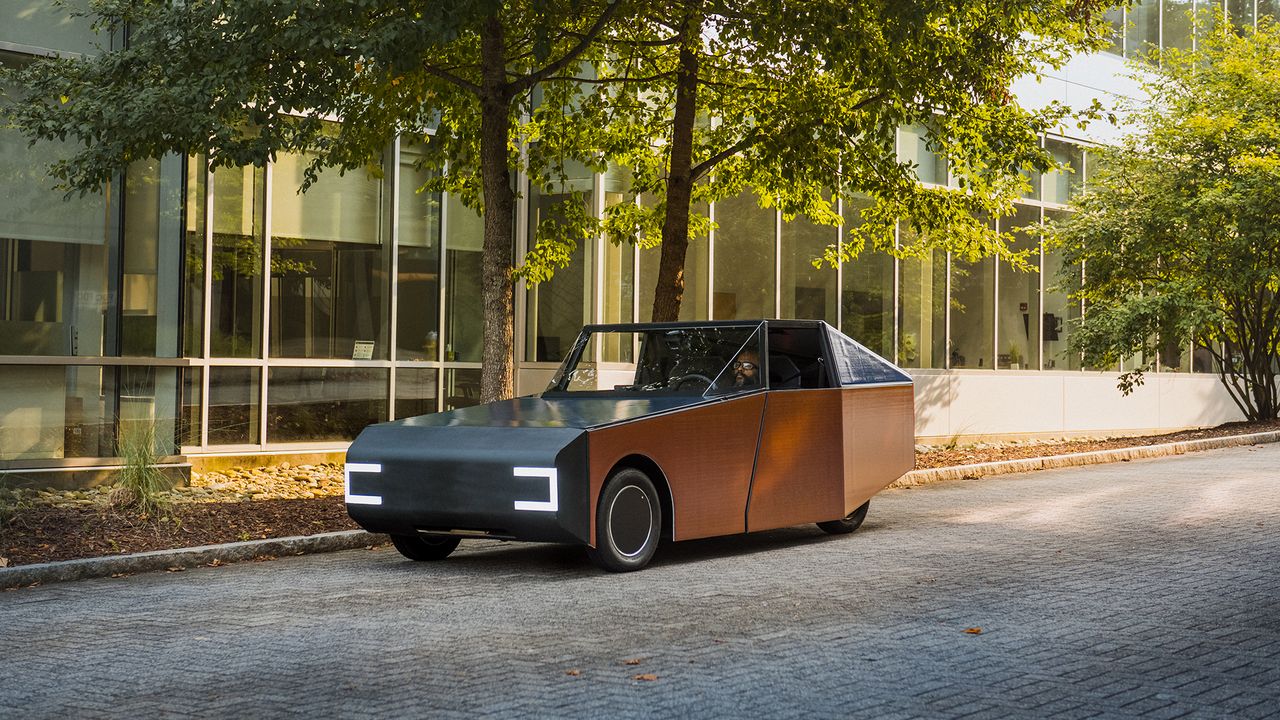
No, Tesla didn’t build this bizarre Cybertruck-inspired solar EV: this BMW-backed solar car project uses the sun’s rays to commute for free
Deep Orange 17 is claimed to generate more electricity than it uses The BMW-backed project uses 1,700 photovoltaic cells The prototype is based on an average 12-mile daily commute A team from Clemson University in South Carolina has produced a small, lightweight electric vehicle that it says can gen
<![CDATA[ <article> <ul><li><strong>Deep Orange 17 is claimed to generate more electricity than it uses </strong></li><li><strong>The BMW-backed project uses 1,700 photovoltaic cells </strong></li><li><strong>The prototype is based on an average 12-mile daily commute</strong></li></ul><p>A team from Clemson University in South Carolina has produced a small, lightweight <a href="https://www.techradar.com/vehicle-tech/hybrid-electric-vehicles/ive-tested-all-the-best-new-evs-of-2026-here-are-my-5-favorites-so-far-from-honda-to-hyundai">electric vehicle </a>that it says can generate more energy than it uses over a typical day of urban driving.</p><p>Dubbed the Deep Orange 17, the boxy prototype, which looks a little like a butchered <a href="https://www.techradar.com/vehicle-tech/hybrid-electric-vehicles/the-tesla-cybertruck-is-officially-a-flop-but-a-smaller-version-could-be-en-route-here-are-5-things-i-think-it-needs">Tesla Cybertruck</a> if you squint hard enough, was fitted with more than 1,700 photovoltaic cells that can produce enough charge to power a typical 12-mile daily commute.</p><p>The fully functional vehicle weighs just 1,212lbs / 550kg, and is predominantly made from aluminum, carbon fiber and 3D-printed metal joints, which are all wrapped around a steel structure.</p><p>Its boxy shape has been designed so the photovoltaic panels can be positioned to maximize their exposure to the sun when the vehicle on the move, when parked, and even when stuck in traffic.</p><figure class="van-image-figure inline-layout" data-bordeaux-image-check ><div class='image-full-width-wrapper'><div class='image-widthsetter' style="max-width:1920px;"><p class="vanilla-image-block" style="padding-top:56.25%;"><img id="kvyMziCLwdewNDfC36LRZV" name="Clemson University Deep Orange 17" alt="Clemson University Deep Orange 17" src="https://cdn.mos.cms.futurecdn.net/kvyMziCLwdewNDfC36LRZV.jpg" mos="" align="middle" fullscreen="" width="1920" height="1080" attribution="" endorsement="" class="inline"></p></div></div><figcaption itemprop="caption description" class=" inline-layout"><span class="credit" itemprop="copyrightHolder">(Image credit: BMW/Clemson University)</span></figcaption></figure><p>Developed in collaboration with the Fraunhofer Institute for Solar Energy Systems ISE in Freiburg, Germany, the solar panels use an innovative construction that continues generating power even when portions of the panels are shaded. The orange coating is part of a durable film that helps protect them.</p><p>According to <a href="https://www.techradar.com/vehicle-tech/hybrid-electric-vehicles/it-is-not-a-form-of-advertising-bmw-defends-spider-man-pop-up-ads-that-have-infuriated-customers">BMW</a>, which is backing the project, the cells generate enough energy on a sunny day to power the tiny EV for up to 31 miles. That means it can generate more than twice the energy it needs to complete the low-mileage average daily commute touted by its makers.</p><p>While most of the energy comes from the photovoltaic panels, the team of 16 engineers also integrated regenerative braking and drew inspiration for the exterior from the aerodynamic characteristics of the boxfish, whose streamlined body naturally reduces drag while maintaining interior volume, apparently.</p><p>Surprisingly, the project doesn’t feature a spartan prototype interior. It's been fitted with Apple CarPlay and Android Auto, as well as digital dials that offer real-time vehicle telemetry and readouts on solar power generation.</p><h2 id="analysis-inspiring-the-next-generation">Analysis: inspiring the next generation</h2><figure class="van-image-figure inline-layout" data-bordeaux-image-check ><div class='image-full-width-wrapper'><div class='image-widthsetter' style="max-width:1920px;"><p class="vanilla-image-block" style="padding-top:56.25%;"><img id="AFoYhbQBEP6SGb7jeeZSpV" name="Clemson University Deep Orange 17" alt="Clemson University Deep Orange 17" src="https://cdn.mos.cms.futurecdn.net/AFoYhbQBEP6SGb7jeeZSpV.jpg" mos="" align="middle" fullscreen="" width="1920" height="1080" attribution="" endorsement="" class="inline"></p></div></div><figcaption itemprop="caption description" class=" inline-layout"><span class="credit" itemprop="copyrightHolder">(Image credit: BMW/Clemson University)</span></figcaption></figure><p>Project manager Anshul Karn explained that it's rare for a master’s student to have the opportunity to experience the complete process of developing a prototype vehicle — and this is exactly what Deep Orange is designed for.</p><p>Of course, we aren’t going to suddenly see BMW put this into production, but EV manufacturers are already toying with the idea of solar panels as a way of extending the range of electric vehicles.</p><p>Nissan, for example, fitted an <a href="https://www.techradar.com/news/nissan-ariya-first-drive">Ariya</a> model with 3.8 square meters of custom solar panels earlier this year that could add 23km (around 14 miles) of additional range on a bright, sunny day.</p><p>Back in 2019, Hyundai became the first manufacturer to launch a car with a solar roof charging system when it added the tech to its Sonata Hybrid, while the Ioniq 5 was available in some markets with a solar charging roof.</p><p>Right now, the technology is expensive given the limited amount of range it can provide, but projects like Deep Orange could go on to influence smaller, lightweight urban transport that could easily harness the power of the sun for 'free' energy.</p> </article> ]]>
Read the full article on TechRadar
Read Full Article →