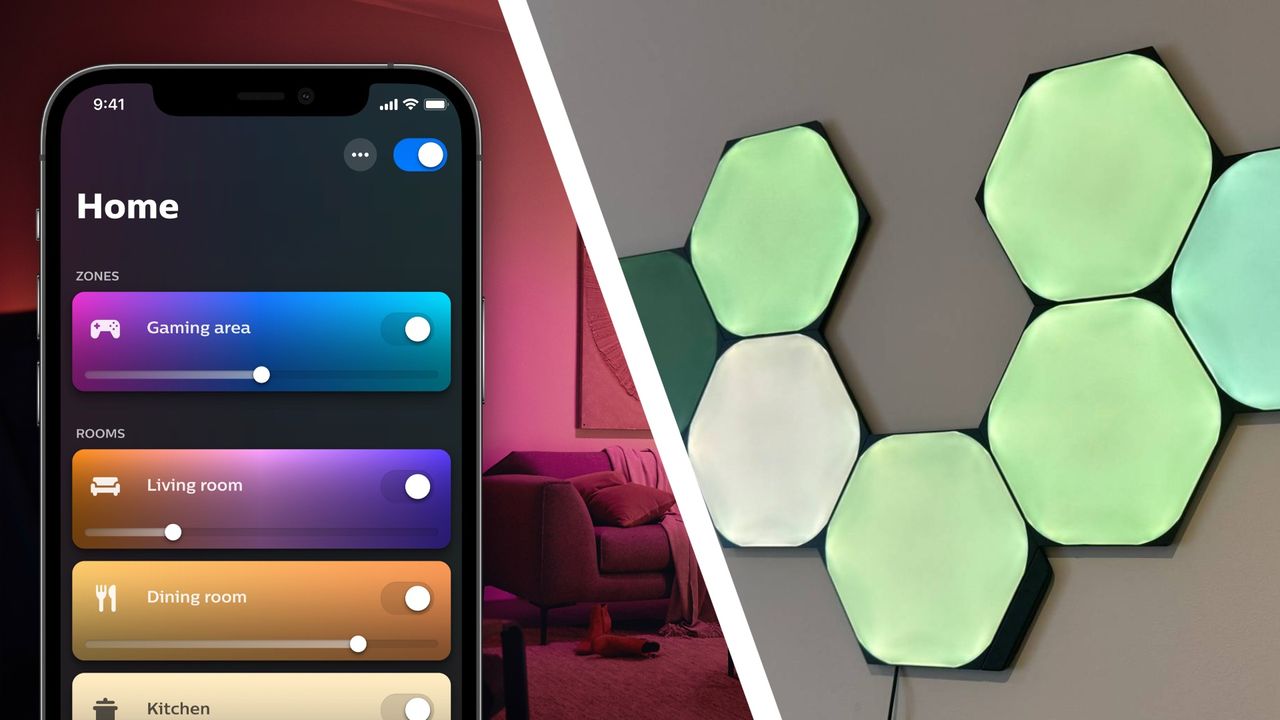
Philips Hue and Nanoleaf could soon reveal an unlikely tie-in — leaked adapter promises to bring Nanoleaf LED modules to your Hue app
Philips Hue could be launching a light module that lets you connect your Nanoleaf Shapes to the Hue app You'll be able to integrate Nanoleaf lights into your Hue schedules and automations It's not Matter-over-Thread, but you might be able to use a Hue Bridge for third-party connectivity We’re just o
<![CDATA[ <article> <ul><li><strong>Philips Hue could be launching a light module that lets you connect your Nanoleaf Shapes to the Hue app </strong></li><li><strong>You'll be able to integrate Nanoleaf lights into your Hue schedules and automations </strong></li><li><strong>It's not Matter-over-Thread, but you might be able to use a Hue Bridge for third-party connectivity </strong></li></ul><p>We’re just one week from IFA 2026, and we already have our ears to the ground for all the pre-event announcements and rumors — and this latest Philips Hue leak is bound to make Nanoleaf users very happy. </p><p>As spotted by the outlet <a href="https://www.smartlights.de/news/philips-hue-wandleuchtenmodul-bringt-nanoleaf-shapes-in-die-hue-app/">Smartlights</a>, Philips is reportedly launching the Hue Wall Light Module next week, meaning that users will be able to integrate their Nanoleaf lights into the Philips Hue ecosystem — which would be a huge win, especially since Nanoleaf is an affordable alternative to the Philips Hue range of <a href="https://www.techradar.com/news/best-smart-lighting">best smart lights</a>. </p><p>The Hue Wall Light Module is said to support the Nanoleaf Shapes LED panels, including Mini Triangles, Triangles, and Hexagons, while older panels (formerly known as Aurora) won’t be supported. Philips’ new module is also expected to be announced on September 3, and will go on sale for 39.99 euros, with international prices expected to follow. </p><p>Essentially, the rumored Hue module is a small white adapter around 8cm that you can plug directly into the connectors in your Nanoleaf panels, allowing you to integrate up to 100 Nanoleaf Shapes panels into your Hue system. That said, the Hue Wall Light Module shouldn’t be confused with the existing Philips Hue Wall Switch Module, which is installed behind a standard wall switch. </p><p>Once your Nanoleaf panels are connected via Philips’ new module, you’ll be able to include them in automations, Hue scenes, and schedules in the Hue app — but whether Nanoleaf’s flagship lighting tools will be carried over is unclear. </p><figure class="van-image-figure inline-layout" data-bordeaux-image-check ><div class='image-full-width-wrapper'><div class='image-widthsetter' style="max-width:2000px;"><p class="vanilla-image-block" style="padding-top:56.25%;"><img id="9TM8dvCdvNTkXSciTcNkAV" name="NanoleafHue" alt="The philips hue app showing nanoleaf shapes" src="https://cdn.mos.cms.futurecdn.net/9TM8dvCdvNTkXSciTcNkAV.jpg" mos="" align="middle" fullscreen="" width="2000" height="1125" attribution="" endorsement="" class="inline"></p></div></div><figcaption itemprop="caption description" class=" inline-layout"><span class="credit" itemprop="copyrightHolder">(Image credit: Smartlight.de)</span></figcaption></figure><p>Similar to Philips Hue, Nanoleaf offers customizable color scenes and animations, but as far as the leaks go, the product images show the Nanoleaf integration working primarily with Hue scenes and effects. The leak shows at least five points in the color selection wheel, suggesting that there’ll be some kind of multicolor control function regardless, but we’ll have to see how this will work after the launch. </p><p>The other catch is that the Philips Hue Wall Light Module isn’t Matter-over-Thread, which, considering Nanoleaf’s devices are mainly Thread- and Matter-supported, is a bit of a departure. Instead, the module uses Zigbee and Bluetooth, the main connectivity protocols Philips has used for some time. </p><p>That said, using a Hue Bridge allows you to connect Philips Hue devices that are non-Matter to hubs such as the Apple HomePod, which is helpful if you use the <a href="https://www.techradar.com/news/best-smart-speakers">best smart speakers</a> to control your home lighting system — though we’ll have to wait and see how the new Philips Hue module handles third-party connectivity once it’s launched. </p><p>Despite these gray areas, the Nanoleaf-Hue integration is an unexpected yet possibly beneficial upgrade. When it comes to smart lighting brands, their respective devices tend to keep you locked into one ecosystem or the other, so having a simple but effective connectivity tool would give users much more flexibility. </p> </article> ]]>
Read the full article on TechRadar
Read Full Article →