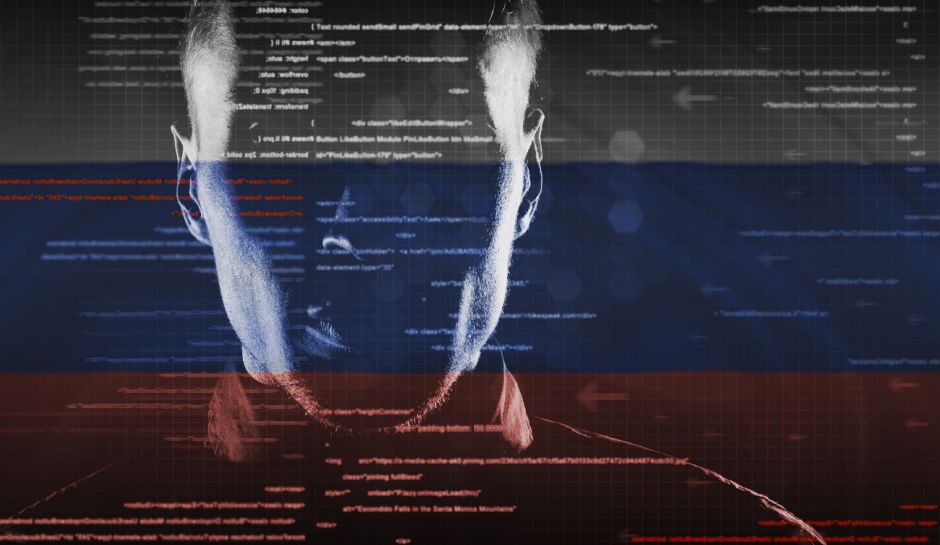
Russia's next tool to fight VPNs appears to be AI — and the numbers suggest it's scarily effective
Russian authorities have reportedly explored using artificial intelligence to identify and block virtual private networks with a staggering 95% effectiveness.
<![CDATA[ <article> <p>Russian authorities have reportedly explored using artificial intelligence to identify and block virtual private networks with a staggering 95% effectiveness.</p><p>According to a report by Russian newspaper<a href="https://www.kommersant.ru/doc/9027535"> Kommersant</a>, the proposal surfaced in a draft national plan for implementing AI technologies through 2030. The ambitious scheme envisioned AI models analyzing the characteristics of 70% of VPN services targeted for censorship.</p><p>While Russia’s Digital Development Ministry claims this AI measure is absent from the plan's current iteration, the underlying intent remains clear. Moscow is already heavily investing in a permanent censorship infrastructure, with recent reports highlighting plans for<a href="https://www.techradar.com/vpn/vpn-privacy-security/russia-to-double-internet-censorship-budget-in-2027-plotting-new-vpn-traffic-fee"> Russia to double its internet censorship budget</a>.</p><p>For citizens or visitors trying to secure their connection, finding the<a href="https://www.techradar.com/vpn/best-vpn"> best VPN</a> is increasingly difficult as the state tightens its grip on circumvention tools. Currently, Russia relies on "intelligent algorithms" rather than true AI to analyze internet traffic. However, the government still intends to increase the capacity of its traffic-filtering infrastructure 2.5-fold to 954 terabits per second by 2030.</p><h2 id="collateral-damage-and-false-positives">Collateral damage and false positives</h2><figure class="van-image-figure inline-layout" data-bordeaux-image-check ><div class='image-full-width-wrapper'><div class='image-widthsetter' style="max-width:1920px;"><p class="vanilla-image-block" style="padding-top:56.25%;"><img id="pvkgvETjmqkheCK3xtsQx9" name="AI" alt="AI brain coming out of laptop screen" src="https://cdn.mos.cms.futurecdn.net/pvkgvETjmqkheCK3xtsQx9-1920-80.jpg" mos="" align="middle" fullscreen="" width="1920" height="1080" attribution="" endorsement="" class="inline"></p></div></div><figcaption itemprop="caption description" class=" inline-layout"><span class="credit" itemprop="copyrightHolder">(Image credit: Getty Images / Surasak Suwanmake)</span></figcaption></figure><p>An AI-powered system would sit atop Russia's existing technical systems for countering threats (TSPU), the dedicated filtering hardware already installed on telecom operators' networks.</p><p>Speaking to Kommersant, a source in the Russian networking industry explained the technical mechanics. “AI automates and accelerates the analysis of connection patterns,” the source noted. The technology would evaluate data points like packet size and timing, session duration, traffic ratios, and neighboring IP addresses to indirectly root out VPN infrastructure.</p><p>However, deploying artificial intelligence to blindly hunt down hidden traffic comes with a steep cost. </p><p>Industry sources cautioned that an AI layer could lead to a surge in false positives, trapping legitimate business and corporate traffic in the dragnet. One source estimated that the algorithmic error rate is already 5% to 6%, and early-stage AI models would likely produce a significant number of incorrect blocks.</p><p>As noted by<a href="https://united24media.com/world/russia-eyes-ai-powered-vpn-crackdown-with-95-blocking-accuracy-23515"> United24 Media</a>, rolling out such a system requires immense resources. A fully operational AI detection net requires large-scale telemetry storage, massive computing clusters for model training, and a complex infrastructure to distribute updated models directly to filtering nodes.</p><h2 id="a-broader-push-for-quot-sovereign-quot-tech">A broader push for "sovereign" tech</h2><p>The drive to automate VPN detection is just one piece of a broader effort by Moscow to tightly control mobile communications and<a href="https://www.techradar.com/vpn/vpn-privacy-security/russia-escalates-vpn-blocks-following-state-duma-elections-in-major-censorship-crackdown"> escalate VPN blocks</a>. Alongside restricting circumvention tools, Russia is attempting to force the tech industry to adopt strictly domestic security standards.</p><p>A recent draft order from the Digital Development Ministry mandates that smartphones operating on Russia's future 5G networks must support "Kuznyechik", an encryption algorithm developed with participation from the FSB’s information-security centre and <a href="https://www1.ru/en/news/2026/10/15/kuznecik-na-straze-v-mincifry-xotiat-vnedrit-rossiiskii-algoritm-sifrovaniia-v-5g-smartfony.html">InfoTeKS</a>. Scheduled to take effect on March 1, 2032, this is not part of the standard 3GPP encryption suite.</p><p>Because the algorithm must be baked into modem chipsets, it could effectively force global manufacturers like Apple and Samsung to build Russia-specific hardware just to operate in the country.</p><p>Ultimately, it appears the Kremlin is prepared to use every technological weapon at its disposal to isolate its digital borders.</p><div data-widget-type="simple" data-model-name="NordVPN,Surfshark,ExpressVPN,Proton VPN,Norton VPN" data-widget-title="Today's best VPN deals"></div> </article> ]]>
Read the full article on TechRadar
Read Full Article →