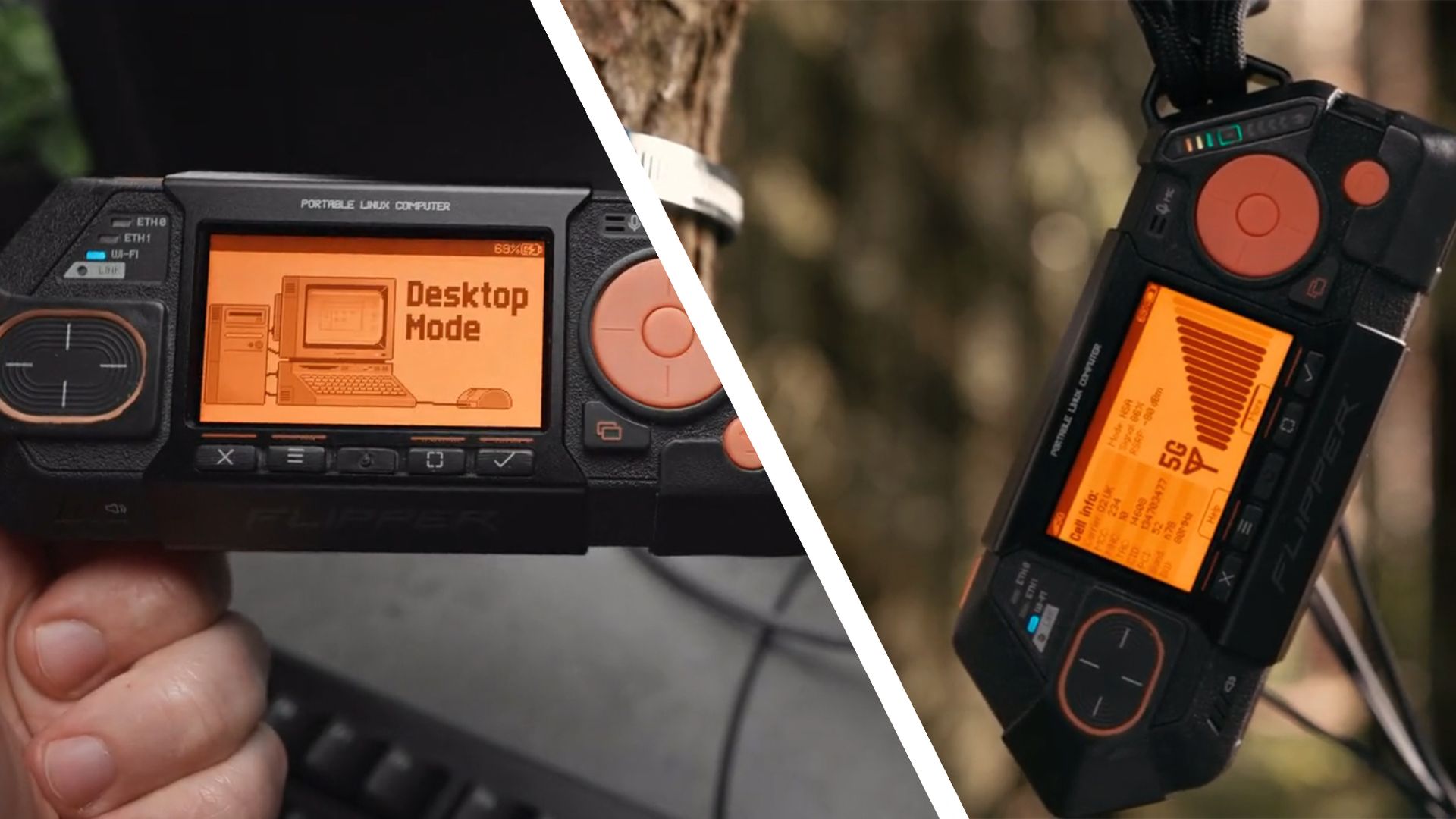
The Flipper One raises $15 million on Kickstarter — here’s what it does
Its makers are insisting it's not a direct successor to the Flipper Zero , but there's a new pocket-sized, mini-computer on the market that's going to appeal to tinkerers, hackers, and tech enthusiasts: the Flipper One.
<![CDATA[ Its makers are insisting it's not a direct successor to the Flipper Zero , but there's a new pocket-sized, mini-computer on the market that's going to appeal to tinkerers, hackers, and tech enthusiasts: the Flipper One. A Kickstarter crowdfunding campaign for the device just went live: it raised $13 million on the first day, and currently stands at more than $14.5 million at the time of writing (and continues to go up rapidly). Given that kind of financial backing and widespread interest, you might be wondering what the Flipper One is, what it can do, and whether it's going to cause as many security headaches as the Flipper Zero. Here's what you need to know. Flipper One vs Flipper Zero: what is it? The Flipper Zero, which launched in 2020 (Image credit: Flipper) Before we get to the Flipper One, it's probably helpful to do a quick Flipper Zero recap. Launched in 2020, the Flipper Zero is a tiny gadget that's still on sale and which can interact with a whole host of fundamental, low-level tech protocols: think Bluetooth, RFID, NFC, and the like. It can analyze and control devices like key cards, fobs, TV remotes, and electronic access points. That's led to numerous security scare stories down the years, but it's not quite the hacker's dream that it's sometimes portrayed as — it can't really get into devices or systems that are competently protected. It's more for geeks and tech enthusiasts who are interested in customizing their gadgets and experimenting with electronics, which does admittedly include testing security vulnerabilities. And so to the Flipper One. The two devices are "completely different projects built for different tasks" according to the team at Flipper. The Flipper One is a similar, compact size, but it runs regular software (Linux) and taps into more consumer-friendly technologies — so Wi-Fi and 5G rather than RFID and NFC. The Flipper One is more powerful and is capable of running more complex software, but it doesn't tap into the raw wireless and wired signals that the Flipper Zero does. It's more interested in Wi-Fi networks, routers, and internet-connected devices — so, for example, the Flipper Zero could mimic a wireless garage door opener but the Flipper One can set up a VPN on a network. What can you do with the Flipper One? The Flipper One will analyze your network for you (Image credit: Flipper) So just how capable is this device? What's so appealing that over 27,000 (and counting) people have pledged money to bring it into being? The Flipper One's Kickstarter page lists many different things you can do with the device — and while it's not suitable for complete beginners, it should be accessible enough for anyone who's reasonably tech-savvy. You can use it to set up a VPN on your network, as already mentioned, and it can act as both a Wi-Fi client and hotspot (with an Ethernet port, it'd work as a travel router in a hotel room). It's able to monitor Wi-Fi networks, so you could check up on the devices connected to your network and check for any security issues, and there's also eSIM capabilities so it can get on cellular networks without any other help. It's helpful for analyzing traffic between smart home devices, and controlling them using custom configurations too. As it's actually a complete mini computer, you can use it as a portable TV media box, and it'll work as an actual desktop computer with the right peripherals attached — just don't expect too much in terms of performance. There's also a lot of scope for expansion with the Flipper One, too. There are already add-ons for connecting to radio signals, so you could use it as a radio scanner, and off-grid communication protocols — the device can work as an off-grid walkie-talkie, for example. Of course, once the developer community gets access to the gadget, we can expect much more functionality to become available. Should we be worried (again)? With the right add-on, you can use the Flipper One as a walkie-talkie (Image credit: Flipper) We've already touched on some of the hacking concerns that have emerged around the Flipper Zero down the years, and they're not without merit. This is a compact device that's able to directly interface with electronics like access cards and key fobs, and test security protocols at basic levels. Perhaps the most concerning capability of the Flipper Zero is its ability to intercept and repeat wireless signals — with a car key fob , for example. However, these kind of hacks have been largely exaggerated , and the Flipper Zero is far from being a magic hacking toy. The majority of systems will have enough security in place to keep it out. The Flipper One can also be used as a hacking device, but in a different sort of way. It's more for prodding and pushing full computer systems and networks: you could test vulnerabilities in your Wi-Fi network or a web server, or even simulate some aspects of cyberattack. On the flip side, it can also be used as a honeypot, a way of trying to lure in and expose other hackers and malware. As with the Flipper Zero though, there's no need to panic about the Flipper One. Its security testing and hacking prowess is not significantly different to a laptop or a Raspberry Pi system — it doesn't suddenly unlock security vulnerabilities in other systems and devices that weren't there before, and could be exposed in other ways. ]]>
Read the full article on TechRadar
Read Full Article →