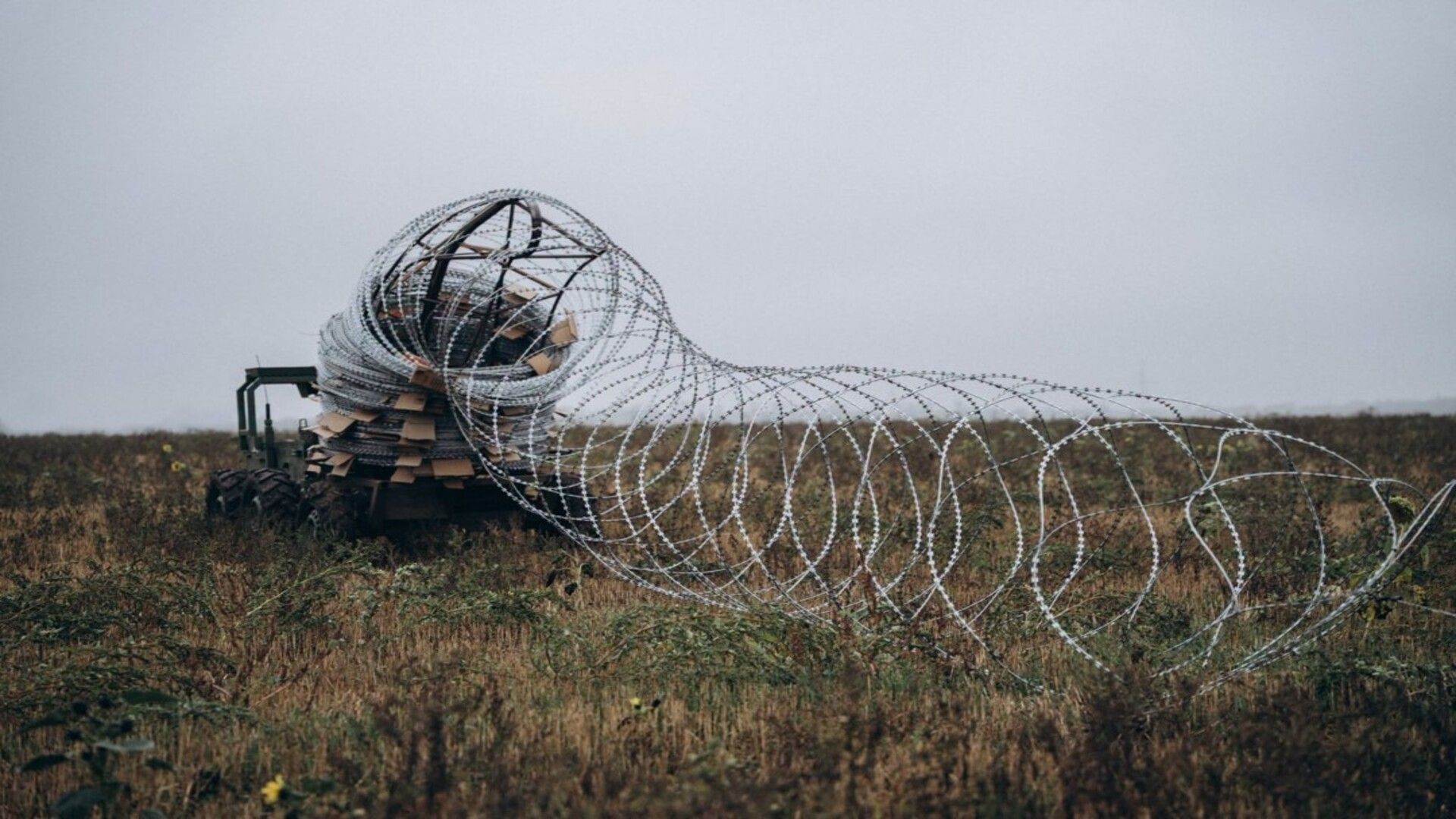
Ukraine is getting ground robots to carry out one of the riskiest battlefield tasks — and they're doing an excellent job
A wheeled robot lays battlefield wire while engineers remain under cover A remote-controlled frame unwinds wire across exposed battlefield terrain without nearby engineers Ukrainian ground-robot missions rose from 7,511 in January to 19,940 in July 2026 Ukrainian troops are using remotely-operated w
<![CDATA[ <article> <ul><li><strong>A wheeled robot lays battlefield wire while engineers remain under cover</strong></li><li><strong>A remote-controlled frame unwinds wire across exposed battlefield terrain without nearby engineers</strong></li><li><strong>Ukrainian ground-robot missions rose from 7,511 in January to 19,940 in July 2026</strong></li></ul><p>Ukrainian troops are using remotely-operated wheeled robots to construct defensive obstacles in dangerous locations where military engineers face direct exposure.</p><p>The ground robot carries coils of wire on specially designed frames, releasing the material across designated areas as it moves forward.</p><p>Images from the Ukrainian military show one of these autonomous vehicles with six wheels, but the manufacturer and model remain unknown.</p><h2 id="ground-robots-take-over-dangerous-engineering-duties">Ground robots take over dangerous engineering duties</h2><p>The ground robot comes with a specially constructed framework mounted above its wheels that helps it to hold the wire rolls in place.</p><p>Its sloping support structure permits the material to unwind gradually while the machine advances, creating obstacles along the chosen route.</p><p>This machine is remotely operated by Ukraine's 16th Separate Support Brigade while remaining under cover.</p><p>This minimizes the risk and removes the need for engineering teams to stand outside protected positions while manually deploying wire across exposed terrain.</p><p>Ukrainian military officials acknowledge these dangers, explaining that robotic machines are now being deployed to construct battlefield obstacles instead of exposing soldiers.</p><p>“Installing barriers in an open area is always a risk for combat engineers. But today, this hard work is done by ground-based drones,” the Ground Forces of Ukraine said on social media.</p><p>At the moment, details regarding the carrying capacity, operational distance, and the amount of fencing that this robot can deploy in a single mission remain undisclosed.</p><h2 id="robotic-missions-increase-sharply-across-ukraine">Robotic missions increase sharply across Ukraine</h2><p>This latest deployment extends Ukraine's expanding employment of unmanned terrestrial machines, protecting soldiers from confrontations.</p><p>Similar systems already transport ammunition and essential battlefield provisions, reducing the frequency of dangerous supply missions.</p><p>Data from Ukraine’s DELTA military management platform shows that robotic activity has increased considerably during the ongoing war with Russia.</p><p>Recorded operations reached 19,940 in July 2026, compared with only 7,511 in January, which points to much greater reliance on remotely operated ground equipment.</p><p>By the beginning of September, the total had reached roughly 112,000 recorded missions, showing how quickly these machines have become part of military operations.</p><p>These numbers cover robotic operations in general rather than wire installation specifically, so they cannot show how often these particular vehicles are used.</p><p>The military has not said how many barrier installation vehicles are currently in use, or whether other units operate similar equipment on the battlefield.</p><p>No figures have been released for successful installations, equipment losses or the distance these machines cover during each assignment, so their real effectiveness remains unclear.</p><p>Via <a href="https://dronefront.com/ukrainian-ground-drones-frontline-barrier/" target="_blank" rel="nofollow">Drone Front</a></p><figure class="van-image-figure inline-layout" data-bordeaux-image-check="" ><div class='image-full-width-wrapper'><div class='image-widthsetter' style="max-width:676px;"><p class="vanilla-image-block" style="padding-top:31.51%;"><img id="diM9tpwF2Lz85R8q85CT78" name="tr-g_news" alt="Google logo on a black background next to text reading 'Click to follow TechRadar'" src="https://cdn.mos.cms.futurecdn.net/diM9tpwF2Lz85R8q85CT78-1920-80.jpg" mos="" align="middle" fullscreen="" width="676" height="213" attribution="" endorsement="" class="inline" /></p></div></div></figure> </article> ]]>
Read the full article on TechRadar
Read Full Article →