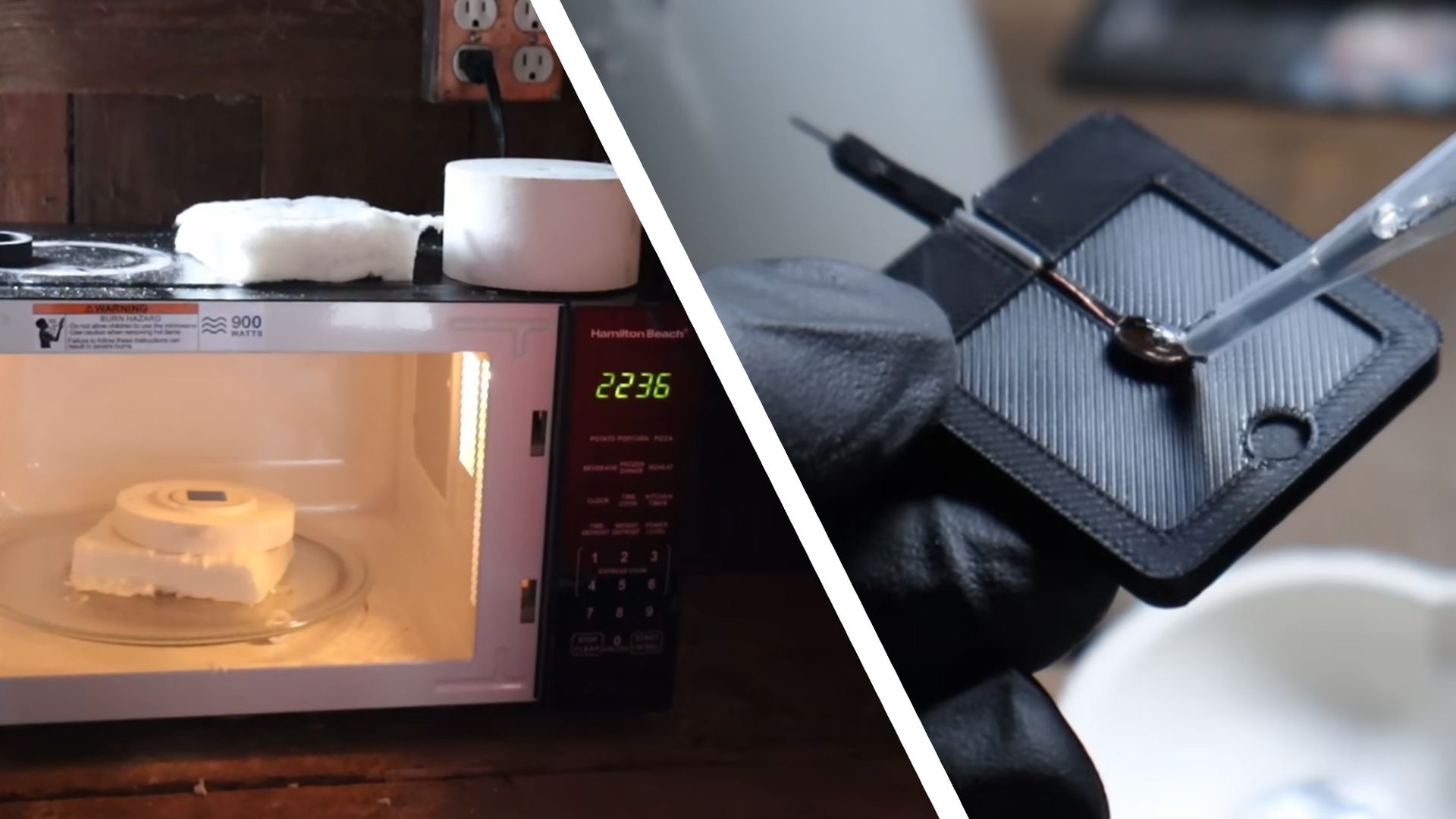
YouTuber makes a fully functioning solar cell at home using a microwave
A new YouTube video shows the process of making a solar cell Low-cost, household items and tools are used throughout The solar cell works and get reach up to 5% efficiency for conversion We've heard of DIY solar before , but this is next-level: YouTuber Dr.
<![CDATA[ <article> <ul><li><strong>A new YouTube video shows the process of making a solar cell</strong></li><li><strong>Low-cost, household items and tools are used throughout</strong></li><li><strong>The solar cell works and get reach up to 5% efficiency for conversion</strong></li></ul><p>We've heard <a href="https://www.techradar.com/home/energy-saving/plug-in-solar-shone-at-ifa-2026-here-are-the-5-best-products-we-saw-from-anker-to-dji-and-ecoflow">of DIY solar before</a>, but this is next-level: YouTuber Dr. Semiconductor has been able to create fully functional solar cells, using low-cost household materials and items, which can reach up to 5% efficiency.</p><p>That's a long way short of professional solar panels of course, but if you check out <a href="https://www.youtube.com/watch?v=zcWkApGjyGM" target="_blank">the video</a> (via <a href="https://interestingengineering.com/innovation/silicon-wafer-working-solar-cell-microwave-kiln" target="_blank">Interesting Engineering</a>), you'll see it's all done without the industrial-scale facilities and instruments usually involved. In fact, you too could do this at home.</p><p>Everything included in the video has been sourced from retailers such as Amazon, Walmart, and eBay, and with fairly standard tools — including sandpaper, household solvents, a repurposed PC cooling fan, and a 3D printer.</p><p>There's <a href="https://www.semiconductor.diy/guides/microwave-solar-panels/" target="_blank">a full guide online</a> if you do want to try this yourself, and while some technical capabilities are definitely needed, it's a fascinating science experiment to try out (even if you're not going to be saving on your electricity bill anytime soon).</p><h2 id="microwave-manufacturing">Microwave manufacturing</h2><div class="youtube-video" data-nosnippet ><div class="video-aspect-box"><iframe data-lazy-priority="low" data-lazy-src="https://www.youtube-nocookie.com/embed/zcWkApGjyGM" allowfullscreen></iframe></div></div><p>Standard solar panels use silicon semiconductors doped with phosphorus to create the electrical boundary that converts light into energy, and Dr. Semiconductor followed the same principles here, starting with a p-type silicon wafer sourced from Amazon.</p><p>The YouTuber then turned to a microwave kiln, widely available at retailers but more typically used for arts and crafts projects. It sits inside a standard microwave and converts microwave energy into heat.</p><p>That heat was used to diffuse phosphorus into the silicon wafer, but temperature control was crucial: too much and the silicon melted completely. Around 1,000C (1,832F) was necessary to get the silicon and phosphorus fused together.</p><p>With some further refining and the addition of soft metal contacts, the solar cell was complete, and tested via a multimeter. What's more, Dr. Semiconductor says there's lots of room to improve on the process — so expect future follow-ups.</p> </article> ]]>
Read the full article on TechRadar
Read Full Article →